The median sale price in Pasatiempo over the trailing twelve months is roughly $1.8 million, against a Santa Cruz County median closer to $1.1 million for the three months ending May 2026. Buyers reading those two numbers usually reach for the obvious explanation. Gated entry. Fairway views. A famous course.
That reading is incomplete. The premium reflects something less visible: a private rules regime that has quietly held the neighborhood's architectural stock in place for nearly a century, now paired with a course restoration completed in December 2024 that reset what "on the fairway" is worth. Understanding both is the difference between overpaying for a view and buying into a mechanism.
Three Mechanisms Behind The Number
Before you compare a Pasatiempo comp to anything else in Santa Cruz, hold three ideas in mind.
- The HOA assessment formula. The Pasatiempo Property Owners Association governs the residential side, and its consolidated Basic Restrictions tie assessment methods in part to habitable square footage. That single design choice quietly changes what a remodel costs to own.
- The course and the community are separate entities. The residential HOA and Pasatiempo Golf Club are separately owned and governed. Buying a house does not buy course access. Course access is a share-based membership transaction, run through the club.
- The December 2024 restoration is a repricing event. Jim Urbina and superintendent Justin Mandon finished an eighteen-month rebuild of all eighteen greens and their bunkers to Alister MacKenzie's 1929 design intent, replacing Poa annua with Pure Distinction bentgrass. Fairway adjacency in mid-2026 is not the same product it was in early 2023.
Everything below is evidence for how those three mechanisms show up in an actual purchase.
The Friction Most Buyers Miss
Start with the HOA, because it is where offers get rewritten.
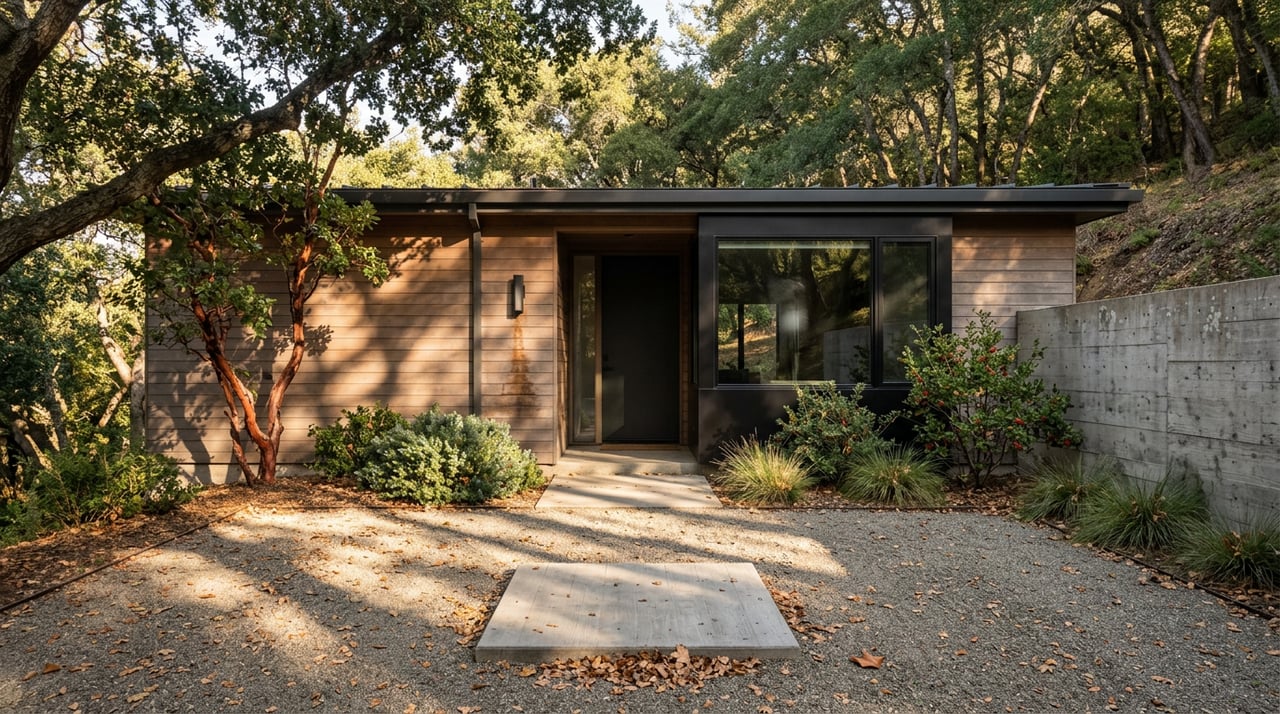
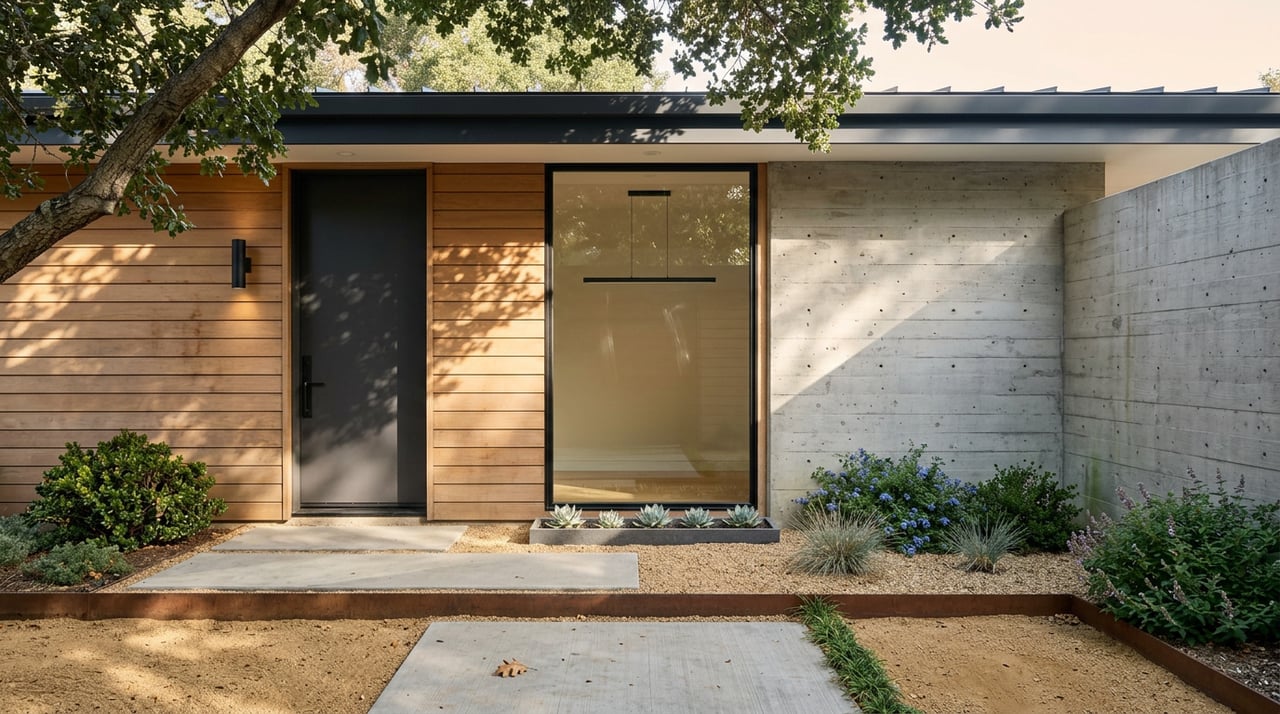
The neighborhood is small and old. There are roughly 300 homes inside the gates, ranging from original residences built in the late 1920s and 1930s through mid-century modern, Colonial Revival, and ranch stock added through the 1950s, 60s, and 70s. Architect William Wurster was prominently involved in early development, and several Wurster homes remain, including the residences originally occupied by founder Marion Hollins and by MacKenzie himself. Livable square footage across the neighborhood generally sits in the 1,848 to 5,548 range.
The Association is run by a Board of Trustees elected to three-year terms, and it enforces a consolidated CC&R document that governs exterior updates, new construction, and design review. Two features of that document deserve a buyer's attention.
First, exterior updates and new construction typically require design review and Board approval. This is standard for private communities, but it means a remodel timeline is not purely a matter of county permits.
Second, and less obvious, the CC&Rs discuss assessment methods based in part on habitable square footage. In plain terms:
The bigger you build, the more you pay to the Association in perpetuity.
That is a genuinely unusual mechanism. Most California HOAs assess a flat dues figure per parcel. Pasatiempo's approach ties an ongoing cost to a variable the owner controls, which changes the math on tearing out walls, popping a second story, or adding conditioned square footage to a 1950s ranch. It also helps explain something a first-time visitor notices immediately: for a neighborhood full of buyers with the means to overbuild, the housing stock has been remodeled inside its original envelope more often than replaced. The rule is doing work.
For a buyer, the practical read is that a comparable-square-foot home in Pasatiempo carries a slightly different ownership cost profile than the same footprint elsewhere in the 95060, and any expansion plan should be underwritten against both county process and Association process. Ask for the current Basic Restrictions PDF and the assessment schedule during the disclosure window. Both are available through the HOA.
What The Restoration Actually Changed
Buyers who toured Pasatiempo before April 2023 and again in 2026 are looking at two different assets.
The course closed nine holes at a time. The front nine reopened December 1, 2023, and the back nine reopened December 6, 2024, closing an eighteen-month project run by Jim Urbina in conjunction with Theisen Downing of Earthsculptures, Brett Hochstein, and superintendent Justin Mandon. All eighteen greens and their bunkers were stripped to the base and rebuilt to MacKenzie's 1929 sizes, shapes, and drainage. Poa annua putting surfaces were replaced with Pure Distinction bentgrass. On the back nine, the greens at the 142-yard 15th and the 173-yard 18th saw the largest changes; the famously three-tiered 16th was tweaked to reopen pin locations that had been lost. Recent play has reported green speeds in the 11.5 range.
None of that is a real estate metric. All of it matters to real estate.
The course sits inside a neighborhood where a large share of homes have some fairway or bay exposure. Before the restoration, that exposure came with the tacit knowledge that greens were failing, bunkers were tired, and the reclaimed-water dispute that shaped the club's operating story was still recent enough to be a talking point. It was resolved in 2016, but the greens issue remained. After December 2024, on-course homes back onto a course that a national audience treats as one of the two or three most important MacKenzie restorations of the decade, currently listed at #93 on Golf Digest's America's 100 Greatest. The lot has not changed. The setting has.
The practical implication is narrow but real. Fairway-adjacent comps from 2022 and 2023 undervalue what a buyer is now stepping into, and non-fairway comps understate the halo effect of a working, restored course on the wider neighborhood. A rigorous CMA in Pasatiempo has to treat pre-April 2023 sales differently than post-December 2024 sales.
Access To The Course Is A Second Transaction
Because the HOA and the club are separate entities, the deed to a Pasatiempo home does not include the right to tee off on the course behind it.
Pasatiempo Golf Club is semi-private and operates on a share-based membership model, with limited daily public play at the club's discretion. The club reinstituted a Trial Membership program under general manager Steve Argo, and share availability, transfer steps, annual dues, and capital fees are handled directly by the club, not the HOA. The pro shop is reachable at (831) 459-9155.
For a buyer whose whole thesis for moving to Pasatiempo is "play the course," this is the friction that determines whether the plan works. Confirm current share availability and total membership cost before the inspection period closes, not after. For a buyer whose thesis is "quiet lanes, mature trees, and privacy fifteen minutes from downtown," the membership question is optional and the neighborhood delivers on its own terms.
Reading The Numbers Against The County
Once the mechanisms are clear, the price gap resolves into something more specific than "luxury enclave."
| Metric | Pasatiempo (trailing 12 mo, mid-2026) | Santa Cruz County (3 mo ending May 2026) |
|---|---|---|
| Median sale price | ~$1.80M | ~$1.10M |
| Days on market | 40 to 52 | 16 |
| Active listings | 3 | 170 sales in May alone |
| Year-over-year price change | Down ~4 to 5% | Down 4.5% |
The county market is thinner in inventory but moves faster. Pasatiempo behaves the opposite way. Homes sit longer because the buyer pool is narrow and the price point self-selects, but the neighborhood carries almost no active inventory at any given moment. That combination, patient time on market plus chronically thin supply, is what a buyer is actually reading when they see the premium. It is a market where a well-prepared listing at a defensible number tends to find its buyer, and where an underprepared listing at an aspirational number sits.
Homes.com's local guide places typical prices roughly between $1.5 million and $3.5 million depending on lot and home size, and neighborhood inventory turnover confirms the pattern: as of the most recent trailing period, active listings often number in the low single digits.
Where That Leaves A Buyer
The three mechanisms compound.
The HOA quietly preserves the original architectural stock and shifts ownership economics against maximal expansion. The December 2024 restoration reset the quality of the amenity the neighborhood is organized around. The club's share structure keeps course access as a separate purchase, which means the "buy the lifestyle" narrative has two closings inside it, not one.
For an out-of-area buyer coming over Highway 17, the honest read is that Pasatiempo is a fit if you value preserved mid-century architecture on generous lots, are comfortable with private governance that has opinions about your remodel, and either want a club membership or genuinely do not care about one. It is a poor fit if the plan is to tear a Wurster-era home to the studs and rebuild at twice the footprint, or if the golf course is assumed to come with the deed.
FAQ
Does buying a home in Pasatiempo include a golf membership?
No. The residential Association and the golf club are separately owned and operated. Membership is share-based and handled through the club.
Are HOA dues in Pasatiempo the same for every home?
The consolidated Basic Restrictions tie assessment methods in part to habitable square footage, so ongoing dues are not identical across every parcel. Ask for the current assessment schedule during due diligence.
Did the course restoration change what homes back onto?
Yes. Between April 2023 and December 2024, all eighteen greens and their bunkers were rebuilt to MacKenzie's 1929 design and reseeded to Pure Distinction bentgrass. Fairway-adjacent comps from before the project should be weighted accordingly.
What kinds of homes actually trade in Pasatiempo?
Primarily 1920s to 1970s original stock in Colonial Revival, mid-century modern, Wurster-era, and ranch styles, on lots ranging from about a quarter acre to more than two acres, typically remodeled inside the original envelope rather than replaced.
How liquid is the market inside the gates?
Thin. Active inventory often sits in the low single digits, and homes have recently averaged roughly 40 to 52 days on market against 16 for the wider county, which reflects a narrower buyer pool rather than weak demand.
If you are weighing a Pasatiempo purchase or preparing to bring a home inside the gates to market, the mechanisms above are the ones worth stress-testing before an offer or a listing price is set. Santa Cruz Luxury works with buyers and sellers on both sides of that decision, with the design-led presentation and quiet, informed representation the neighborhood tends to reward. Schedule a private consultation to talk through your specific address, your remodel plans, or the comps that should actually shape your number.